
TLDR: In Memorial homes, pet odors usually come back because the smell is deeper than the surface. Carpet padding, upholstery, baseboards, and humid indoor air can all keep reactivating the odor after a cleaning that only handled the visible area.
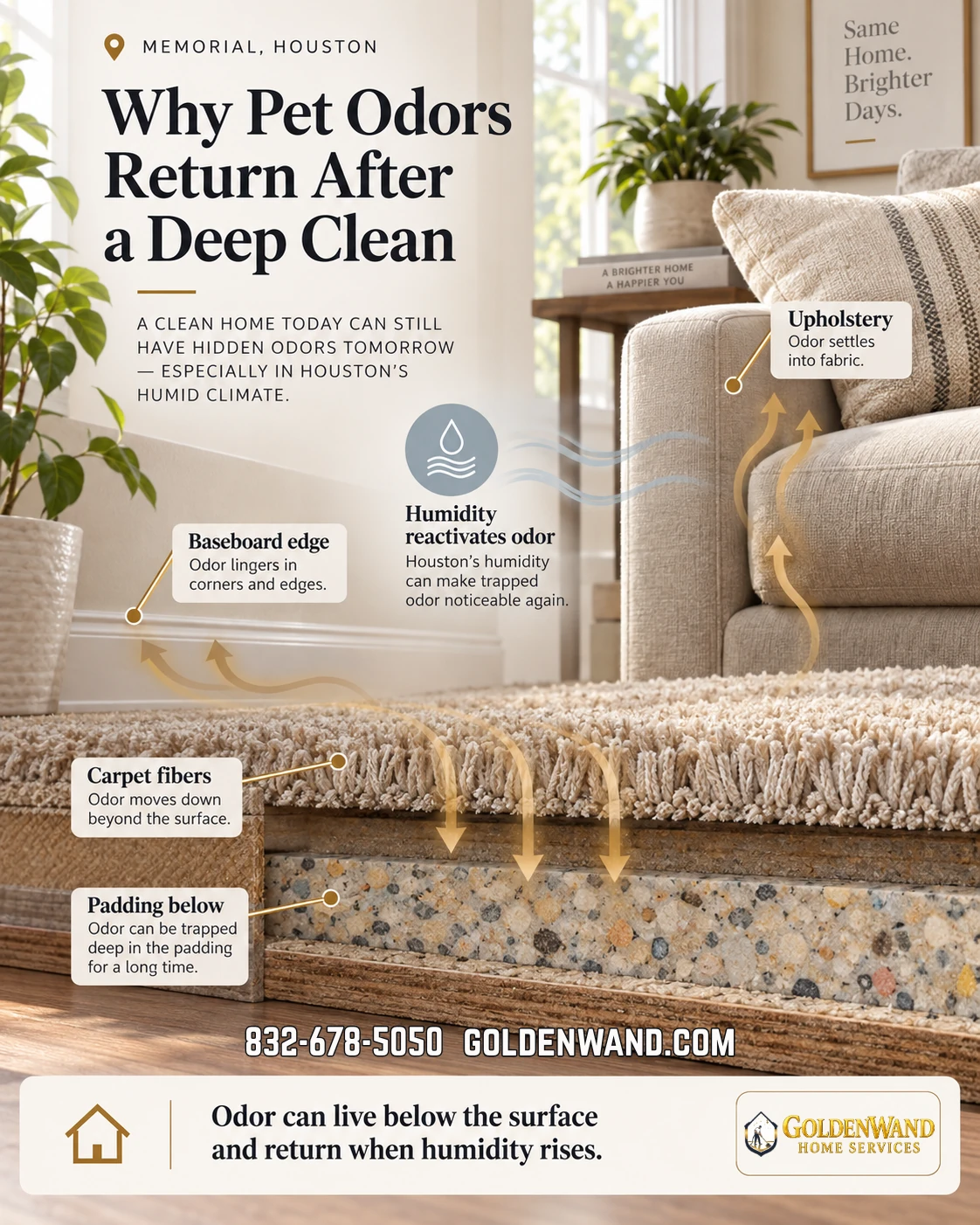
If the room smells fine right after cleaning and then the odor returns a day or two later, that usually means the source was not fully removed. In Houston humidity, that problem tends to show up fast, especially in closed-up rooms with carpet, rugs, and soft furniture.
Pet odor is one of those issues that makes a house feel “not quite clean,” even when the floors look better. Homeowners in Memorial often notice the smell most after the AC has been running, after a rainy stretch, or once the house settles back into its normal routine. Dogs and cats are part of the family. Their odors, unfortunately, can be very committed.
The frustrating part is that the visible spot is not always the real problem. A small stain can hide a much larger odor path below the carpet or along the wall edge, which is why the smell keeps coming back.
Why does pet odor keep returning after a deep clean?
Most recurring pet odors are caused by residue that has soaked beyond the carpet fibers. Once moisture, urine, or pet dander gets into porous materials, the smell can linger in places a basic cleaning does not fully reach.
- Carpet padding: A common hold point when an accident sits too long.
- Backing and tack strip edges: Odor can travel farther than the visible stain.
- Upholstery: Sofas, chairs, and ottomans often absorb odor more than homeowners expect.
- Baseboards and trim: The lower wall line can trap odor in repeated problem areas.
- Nearby soft items: Rugs, pet beds, and blankets can keep reintroducing the smell.
One thing that catches families off guard is how often the stain is smaller than the odor zone. The eye sees one spot. The nose is dealing with a wider area.
What makes Memorial homes especially prone to lingering pet smells?
Memorial homes often have a mix of carpet, area rugs, upholstered seating, and closed indoor spaces that stay comfortable for people but can trap odor. Once humidity rises, those smells become easier to notice again.
In homes we visit, the odor usually shows up in the rooms that get the most daily use. Living rooms, bedrooms, hallways, and pet hangout corners are the places where a “cleaned” room still does not feel fresh enough.
Houston weather plays a role too. After a rainy week or during late-summer humidity, lingering odor can feel stronger even if the room has not changed much. Moisture does not create the smell, but it can make it far more noticeable.
Local conditions that make odor harder to control
- High humidity that keeps odor from fading quickly
- Frequent rain that brings in damp air and tracked-in moisture
- Year-round HVAC use that keeps homes closed up more often
- Busy family traffic that pushes residue deeper into flooring and fabrics
- Pets spending more time indoors during hot Houston months
Where pet odor usually hides
During odor assessments, we often see the same pattern. Homeowners clean the top layer, but the source is sitting just below it or beside it.
- Padding under carpet: This is one of the biggest reasons odors return.
- Room edges near walls: Odor can linger where regular cleaning tools do not reach well.
- Furniture cushions and skirts: Pets tend to return to the same resting spot.
- Layered rugs: Odor can get trapped between the rug and the floor below it.
- Pet bedding and washable covers: These can keep feeding the smell back into the room.
In many builder-grade homes we visit, open floor plans make this more confusing. The room looks simple, but odor can spread across more than one surface and settle in different zones at once.
How to tell whether the problem is surface-level or deeper
| What you notice | What it usually means | Why it matters |
|---|---|---|
| Odor returns after the room dries | The source is likely below the visible surface | Padding, backing, or upholstery may still be holding residue |
| Smell is stronger in humid weather | Moisture is reactivating lingering odor | Common in Houston homes that stay closed up most of the day |
| One area keeps smelling off | The source is probably localized | Repeated accidents or a favorite pet spot may be involved |
| The room looks clean but still feels stale | Appearance improved more than the odor source did | Surface cleaning helped, but the problem was not fully removed |
Why DIY fixes often fall short
A homeowner can absolutely improve a room with spot cleaning, enzyme products, and good ventilation. The trouble is that DIY work usually stops right where the odor starts getting stubborn.
Many homeowners assume a stronger cleaner or more fragrance will solve the issue. In reality, masking the smell is not the same as removing the source. If the odor has soaked into padding or upholstery, the room may smell better for a short time and then slide right back.
Another common problem is using too much moisture. That can push odor deeper into the material or leave the area damp long enough for the smell to hang around even longer. That is a frustrating tradeoff, because the room looks like it got a serious cleaning, but the nose tells a different story.
| Situation | What homeowners usually try | What tends to work better |
|---|---|---|
| Fresh pet accident on carpet | Blot, clean, and dry quickly | Check padding and nearby material for deeper contamination |
| Old odor that keeps returning | Spray deodorizer or shampoo the visible area | Target the source in carpet backing, padding, upholstery, or trim |
| Whole room smells stale | Open windows and use air freshener | Assess soft surfaces and repeated pet pathways |
What professional pet odor removal changes
Professional pet odor removal is less about covering the smell and more about finding where it lives. That usually means looking beyond the visible spot and treating the materials that hold odor the longest.
At Golden Wand Home Services, that matters because Memorial homeowners usually want the house to feel genuinely fresh again, not just smell like a product for an hour.
- Identify whether the odor is in carpet, padding, upholstery, or a combination
- Focus treatment where the smell is actually embedded
- Reduce the chance of odor returning after the home warms up or humidity rises
- Help homeowners avoid repeating the same surface-only fix
Before choosing a cleaning approach, it helps to think in terms of source, not just symptom. That is especially true in homes with pets, kids, and steady foot traffic.
Planning mistakes that make odor harder to solve later
One mistake we see repeatedly is waiting until the smell is obvious to everyone in the house before addressing it. By then, the odor may have already spread into more than one material.
- Waiting too long after repeated accidents in the same spot
- Cleaning only the visible stain and ignoring nearby fabrics
- Using heavy fragrance before identifying the source
- Over-wetting carpet or upholstery during DIY attempts
- Forgetting about pet bedding, throws, and washable covers that keep reintroducing odor
That delay matters because the deeper the odor gets, the more limited the easy fixes become. Finished rooms, furniture placement, and daily use patterns can turn a simple cleanup into a more involved odor problem.
Practical steps Memorial homeowners can take right away
If you are trying to keep the smell from coming back before guests arrive or before the house starts feeling stale again, a few practical steps can help:
- Remove and wash pet bedding, blankets, and washable covers.
- Check the same area from different angles, including near baseboards and furniture edges.
- Use ventilation carefully after cleaning so moisture does not linger.
- Avoid over-wetting carpet or upholstery.
- Watch for repeat accidents in the same path, corner, or resting spot.
If the odor has already settled into padding or upholstery, these steps may only buy you time. They are helpful, but they are not always the finish line.
When a deeper inspection is worth it
If the odor keeps coming back after cleaning, it is usually time to stop guessing. A deeper inspection is worth it when:
- The same room smells off again within a day or two
- You have already tried store-bought cleaners
- The odor gets stronger in humid weather
- Pets use the same area repeatedly
- The smell seems to spread beyond the original spot
During planning walkthroughs, we also pay attention to thick carpet, layered rugs, upholstered furniture, and tight corners near walls. Those details matter more than most people expect.
How humidity and indoor air affect the smell
Late summer is a rough season for odor problems in Memorial. Once the house stays closed up and the air gets sticky, smells that were barely noticeable can suddenly become hard to ignore.
The EPA notes that moisture control is an important part of maintaining healthier indoor air. That same idea applies here. If moisture is helping the odor hang around, the smell will keep making a comeback. EPA indoor air quality guidance is a helpful reference for homeowners who want the bigger picture.
We also see this show up in homes where the HVAC is running constantly but the odor source is still active. Air movement helps, but it does not replace source removal.
How this usually plays out in real homes
In many homes we visit, the visible issue is only part of the problem. The bigger clue is usually how the room, material, or routine is being used every day.
- Pets have a favorite corner: The odor keeps returning because the same area gets hit repeatedly.
- The room has layered fabrics: Carpet, rugs, and furniture all hold odor differently.
- The house feels closed up: Odor has fewer places to dissipate.
- The cleanup was too shallow: The surface looked better, but the source stayed behind.
By the time the home is fully lived in, odor control becomes less about quick fixes and more about knowing where the problem actually started.
Frequently Asked Questions
Why does pet odor come back after carpet cleaning?
Usually because the odor source is below the carpet surface. If urine or residue reached the padding, backing, or nearby trim, the smell can return after the carpet dries.
Does humidity make pet odors worse?
Yes. In Houston, humidity can make lingering odors more noticeable, especially in closed-up rooms. Moisture does not create the odor, but it can help it show up again.
Can regular shampooing remove pet odor completely?
Not always. Shampooing can improve the look and smell of the surface, but deeper odor often needs a more targeted treatment that addresses the source material.
What areas of the home hold pet odor the longest?
Carpet padding, upholstered furniture, rugs, baseboards, and pet bedding are common hold points. Rooms with repeated pet traffic usually need the most attention.
When should I call for professional pet odor removal?
If the smell keeps returning after cleaning, gets worse in humidity, or seems to come from the same room again and again, it is a good time to have it assessed professionally.
A cleaner home should smell clean, too
Pet odors that keep coming back are frustrating because they make the whole house feel harder to enjoy. If you have already cleaned the visible spot and the smell still lingers, the issue is probably deeper than the surface.
Golden Wand Home Services helps Memorial homeowners get to the source of the odor, not just the part you can see. If you want a more lasting solution, our team can help you figure out what is holding onto the smell and what needs to be treated next.
Ready for a more thorough answer? Call 832-678-5050 or visit pet odor removal to schedule a professional assessment with Golden Wand Home Services.
Related services homeowners often ask about
If pet odor has spread beyond one room, it can help to look at the surrounding surfaces too. In some homes, upholstery or carpet cleaning is part of the fix, especially when pets spend a lot of time on the same furniture or rugs.
