
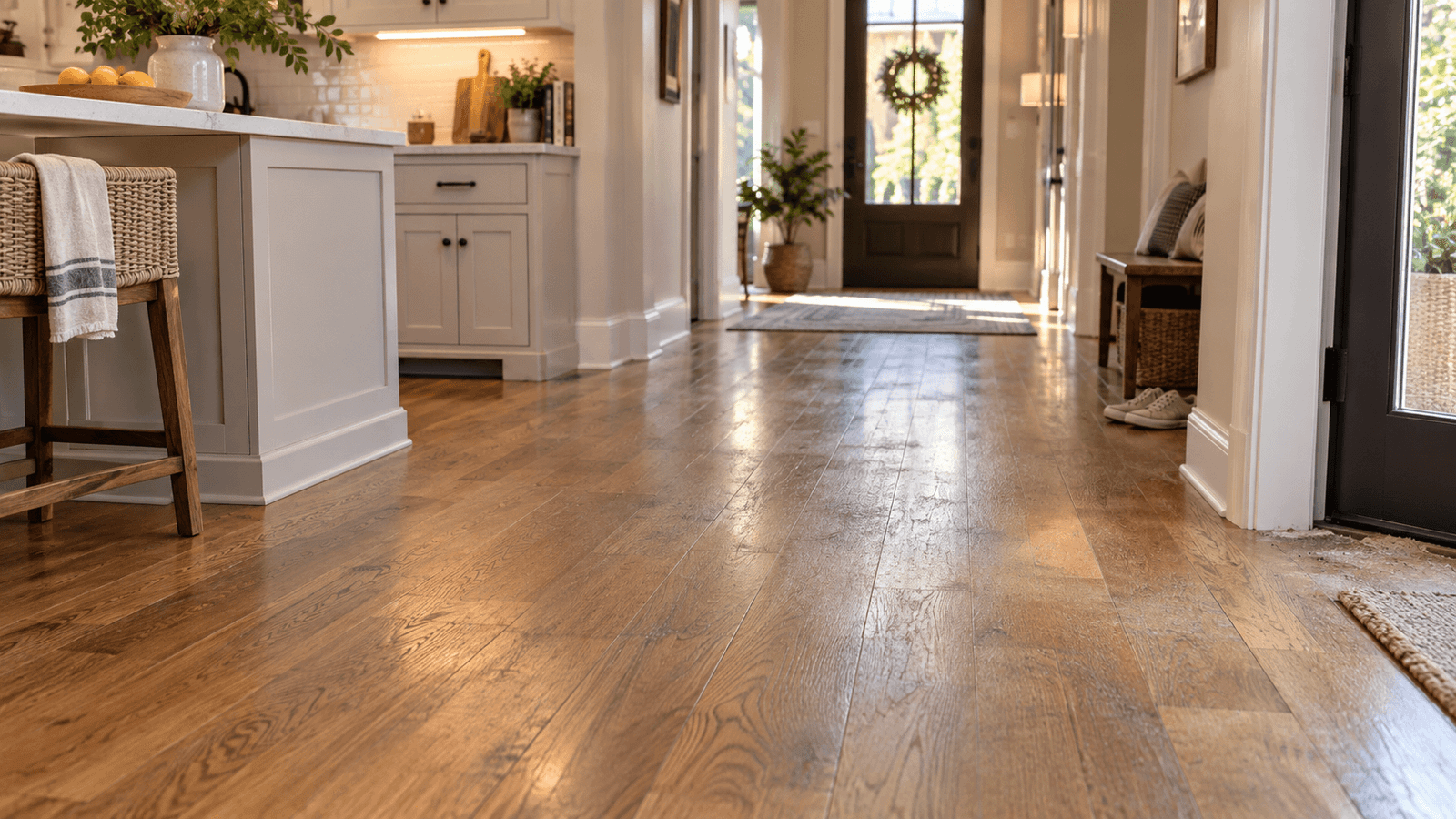
TLDR: Wood floor cleaning in Katy is not just about making floors look shiny. If they still feel grimy underfoot, the real issue is usually residue, fine dust, or finish wear in high-traffic areas, not just visible dirt.
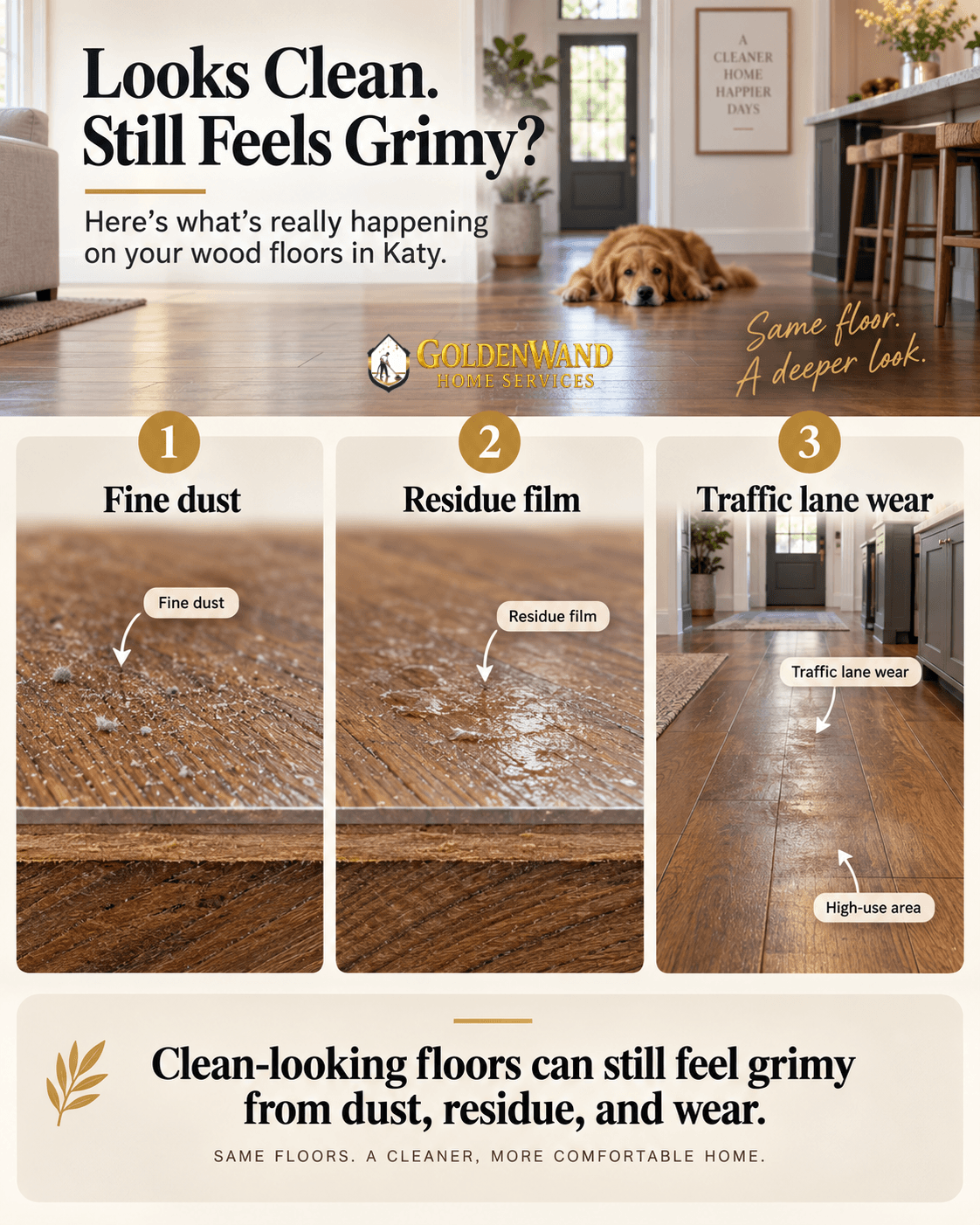
That “clean but sticky” feeling is frustrating, especially when you sweep, mop, and still notice it most in the kitchen, entry, and hallway. In Katy homes, summer humidity, tracked-in dust, and everyday foot traffic can make wood floors feel dull faster than homeowners expect.
Why do wood floors still feel dirty after routine cleaning?
The short answer is that the floor may be clean on the surface but still holding onto residue. A lot of homeowners use too much cleaner, too much water, or the wrong product for the finish. That can leave a thin film that grabs dust and makes the floor feel tacky instead of fresh.
In homes we visit around Katy, the problem often shows up first where people walk the most. Kitchens, mudroom entries, and hallways collect the daily mix of oils, dust, pet dander, and whatever got tracked in after the last rain. It is not glamorous, but it is real life.
- Residue from over-mopping
- Fine dust settling into surface texture
- Grease near kitchens and eating areas
- Finish wear in high-traffic lanes
- Humidity making buildup feel more noticeable
The hidden layer most homeowners miss
One thing that catches families off guard is that a floor can look bright from across the room and still feel off when you walk barefoot on it. That usually means the issue is not one big mess. It is a thin layer of buildup that regular sweeping does not remove.
During installations and service visits, technicians often notice the same pattern: the visible dirt is only part of the story. The bigger clue is how the floor behaves in the places people use every day. If socks drag a little or the surface feels uneven, there is usually residue or wear involved.
According to the EPA’s indoor air quality guidance, dust and particles inside the home can affect comfort and cleanliness. That matters on wood floors too, because fine debris tends to settle where daily traffic keeps stirring it back up.
What we commonly see in Katy homes
In many builder-grade homes we visit, the flooring itself is fine, but the maintenance routine is working against the finish. A quick mop with a heavy cleaner can leave the floor looking okay for a day, then tacky again by the next afternoon.
We regularly see this in neighborhoods like Cinco Ranch, where busy family schedules, pets, and constant in-and-out traffic keep floors from ever really getting a break. Add a little summer humidity, and the floor can feel like it is holding onto every footprint.
- Entryways that collect grit from shoes
- Kitchen paths that dull faster than the rest of the room
- Pet traffic that leaves a faint film behind
- Areas near sliding doors where moisture and dust meet
- Floors that look better right after cleaning, then lose that feel quickly
Why your floors may look fine but feel grimy
There is a difference between appearance and touch. A floor can reflect light nicely and still have a slightly sticky finish if the surface is loaded with cleaner residue or worn in a way that catches dirt. That is especially common in kitchens where cooking oils drift farther than people realize.
Homeowners are often surprised when the real issue is not a dramatic stain. It is the slow buildup that happens a little at a time. You do not notice it on Tuesday, then by Saturday the floor feels like it needs another cleaning already.
| Condition | What Homeowners Notice | Why It Matters |
|---|---|---|
| Cleaner residue | Tacky or slightly sticky feel | Attracts dust and makes floors dull again quickly |
| Surface wear | Flat, uneven look in traffic lanes | Finish is thinning, so dirt shows and feels more noticeable |
| Fine dust buildup | Floor looks clean but feels dusty underfoot | Regular sweeping may move dust around instead of removing it fully |
| Kitchen film | Slight drag when walking barefoot or in socks | Cooking residue can spread farther than the cooktop area |
A smarter way to think about wood floor cleaning
Before choosing equipment or products, it helps to decide what you are actually trying to fix. Are you dealing with dullness, stickiness, dust, or wear? Those are not the same problem, and treating them the same way usually leads to disappointment.
During planning walkthroughs, we often tell homeowners to start with the symptoms they feel underfoot, not just the part they can see. That simple shift saves a lot of frustration later.
- Dull look: often points to residue or finish wear
- Grimy feel: usually means buildup in the surface texture
- Uneven appearance: traffic lanes may need more than a basic wipe-down
- Quick re-soiling: the cleaning method may be leaving behind film
On projects where we are called in later, the issue is often not just the surface symptom but the condition that allowed it to keep returning. That is why a safe, professional wood floor cleaning approach matters more than a stronger cleaner.
Why Katy weather makes this feel worse in August
August in Katy has a way of making everything a little stickier, including floors. Between humidity, constant air conditioning, and families moving in and out all day, wood floors can start to feel tired before fall even gets here.
Spring pollen also hangs around longer than people expect in this part of Texas. It gets tracked in on shoes, pet paws, and bags from the garage, then settles into the same traffic lanes over and over again.
In homes around Katy and Cypress, we commonly see the same seasonal pattern:
- More dust entering through doors and entries
- More barefoot traffic, which makes texture more noticeable
- More kitchen use during summer break
- More humidity making residue feel heavier on the floor
The mistake that makes floors feel worse
One mistake we see repeatedly is using a cleaner that leaves behind too much product. Homeowners mean well. They want the floor to smell fresh and look polished. But wood floors usually do better with the right amount of the right cleaner, not more cleaner.
Too much moisture can also be a problem. Wood does not like being soaked, even a little at a time. The floor may not show damage right away, but repeated over-wetting can change how the finish feels and how dirt sticks to it.
That is why a professional wood floor cleaning service is often the safer choice when the floor feels grimy but looks mostly intact. The goal is not to scrub harder. The goal is to remove buildup without stressing the finish.
Problem, quick fix, and better long-term fix
| Problem | Basic Fix | Better Long-Term Fix |
|---|---|---|
| Sticky feel after mopping | Use less product and less water | Professional wood floor cleaning matched to the finish |
| Dust keeps returning | Dry sweep more often | Remove residue that is holding onto particles |
| Dull traffic lanes | Spot clean visible marks | Clean the full path where buildup is repeating |
| Kitchen floor feels off | Wipe the obvious area | Address the film that spreads beyond the stove and sink |
What a professional cleaning should actually do
A good cleaning should leave the floor feeling cleaner, not coated. That sounds obvious, but it is the part many homeowners are chasing after a few disappointing DIY attempts.
For wood floors, the service should be gentle, finish-aware, and focused on removing buildup without leaving excess moisture behind. The result should be a floor that feels smoother underfoot and looks more even in the light.
- Removes residue without flooding the surface
- Targets traffic lanes and problem areas
- Helps restore a more natural finish feel
- Supports a cleaner look between regular maintenance visits
If you are comparing options, it is worth reviewing our wood floor cleaning service details, especially if the floors have started to feel dull in more than one room.
When the floor needs more than a mop
There is a point where routine cleaning stops being enough. If the floor keeps feeling grimy a day or two after cleaning, or if the same lanes always look worse, that usually means the buildup is deeper than surface dust.
That is especially true in homes with pets, kids, and open floor plans. The traffic pattern is not random. It runs from the entry to the kitchen to the main living space, and the floor wears that pattern whether we notice it or not.
For Katy homeowners who want a local option, our wood floor cleaning in Katy page explains how we approach these floors with the finish and the room layout in mind.
Simple checks before you book a cleaning
A few quick checks can help you tell whether the issue is residue, wear, or just everyday dust:
- Run a clean dry sock across the floor in a traffic lane.
- Notice whether the floor feels tacky or just dusty.
- Check if the problem is worse near the kitchen or entry.
- Look for a dull strip where people walk most often.
- See whether the floor looks better right after cleaning, then loses that feel fast.
If the answer is yes to more than one of those, a deeper wood floor cleaning is probably more useful than another round of mopping.
Practical maintenance that actually helps
A strong maintenance routine does not need to be complicated. It just needs to respect the finish and the way the home is used.
- Dry dust or sweep regularly to lift grit before it gets ground in
- Use a cleaner made for wood floors, not a heavy all-purpose product
- Avoid soaking the floor with water
- Pay attention to kitchen paths and entry points
- Address pet traffic areas before buildup becomes obvious
One non-obvious insight: the floor that feels “dirty” may actually be the floor that is over-cleaned with the wrong method. That is a frustrating twist, but it is common enough that technicians notice it right away.
Frequently Asked Questions
Why do my wood floors feel sticky after I clean them?
Sticky floors are usually caused by cleaner residue, too much water, or a product that is not suited to the finish. The floor can look clean and still feel tacky because a thin film is left behind.
Can humidity really make wood floors feel grimier?
Yes. In Katy, humidity can make residue and dust feel more noticeable, especially in high-traffic rooms. The floor may not be dirtier in a dramatic way, but it can feel heavier and less fresh.
Is it safe to mop wood floors often?
It depends on the finish and the method. Frequent wet mopping with too much product can create buildup or stress the surface. Dry dusting and the right wood-safe cleaning approach usually work better.
Why do the kitchen and hallway look worse than the rest of the house?
Those areas get the most traffic, the most tracked-in grit, and often the most residue from shoes, pets, and cooking. They are the first places where a floor starts to feel off underfoot.
When should I call for professional wood floor cleaning?
If the floor still feels grimy after routine cleaning, if it dulls quickly, or if the same traffic lanes keep looking worse, professional cleaning is a smart next step. It is especially helpful when you want a safer approach for the finish.
A cleaner feel starts with the right approach
If your wood floors in Katy look fine from a distance but still feel grimy when you walk across them, you are probably dealing with buildup, not just surface dust. That is fixable, but it usually takes more than another quick mop.
Golden Wand Home Services helps homeowners get floors back to a cleaner, more comfortable feel without taking unnecessary risks with the finish. If you want a careful, professional assessment, we are happy to help.
Call 832-678-5050 to book a wood floor cleaning assessment and ask what is safe for your finish. You can also visit Golden Wand Home Services to get started.
