
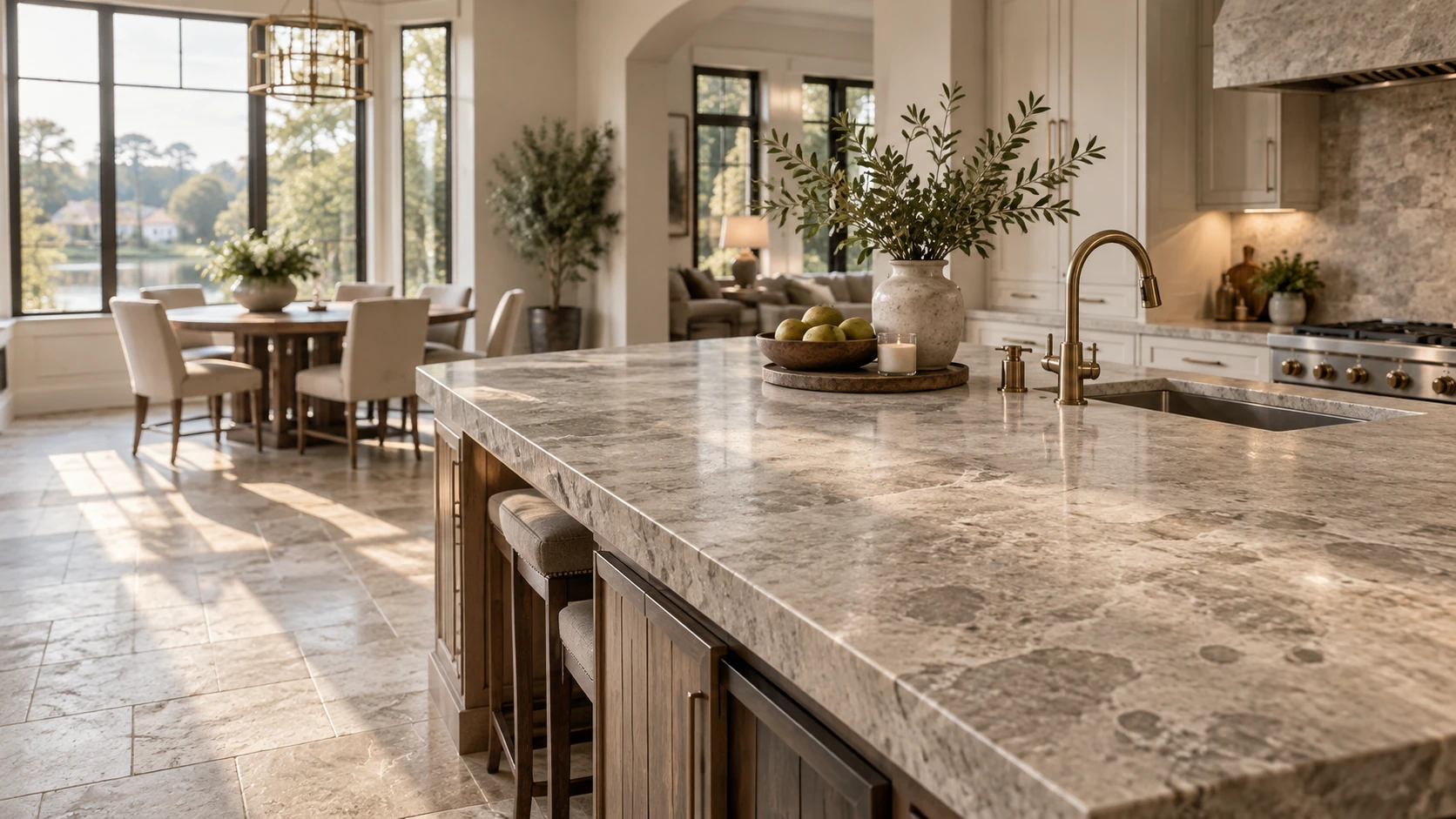
TLDR: If your stone polishing The Woodlands project still looks cloudy, dull, or patchy after cleaning, the issue is often etching, residue, or wear in the finish, not just dirt. The right fix depends on the stone type, the damage, and where the surface gets daily use.
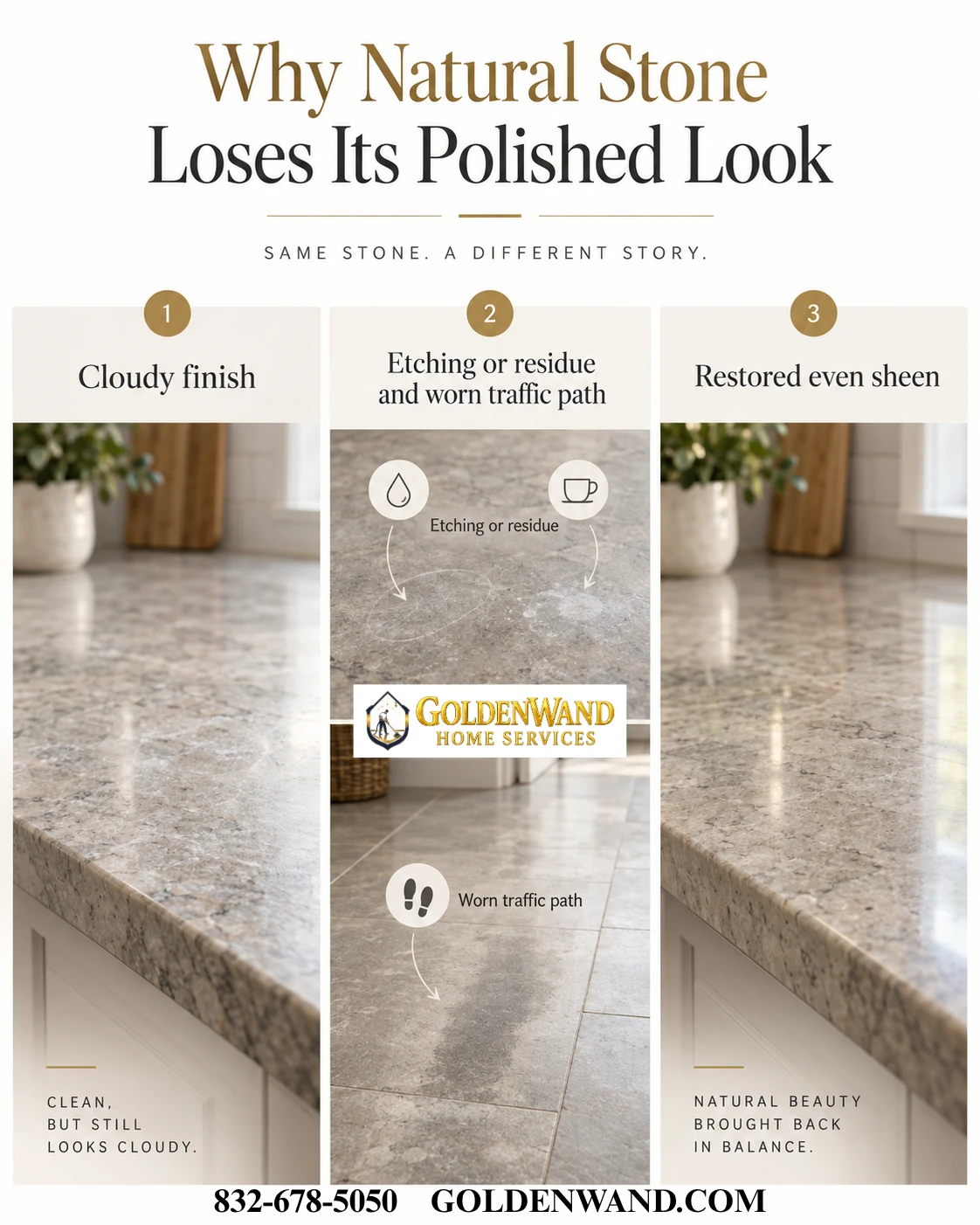
Stone counters and floors can lose that clean, polished look slowly enough that homeowners barely notice at first. Then one day the kitchen island looks hazy in the afternoon light, the entry floor has dull traffic paths, and the surface just feels tired. In The Woodlands, humidity, pets, guests, and regular kitchen use tend to make those changes show up faster than people expect.
Golden Wand Home Services helps homeowners restore natural stone surfaces with a focus on long-term results, not a quick shine that disappears after a week. If the finish is fading, the real question is what changed in the stone itself.
Why stone starts looking dull even when you keep it clean
Routine cleaning removes surface soil, but it does not always solve the reason stone looks hazy or uneven. Natural stone can be affected by etching, worn finish, residue from the wrong cleaner, or tiny scratches that scatter light. That is why a countertop can be spotless and still look a little tired.
In homes we visit, the visible problem is often only part of the story. The bigger clue is usually where the surface gets handled every day, like around sinks, cooktops, entryways, and the path from the garage into the kitchen. That is where finish wear shows up first.
- Etching: dull spots caused by acidic spills or cleaners
- Residue buildup: film that leaves stone looking cloudy
- Wear patterns: traffic paths that reflect light differently
- Micro-scratches: fine abrasion from grit, shoes, or repeated wiping
- Sealer issues: protection that is worn, uneven, or overdue for maintenance
What homeowners usually notice first
One thing that catches families off guard is how the problem shows up in different ways depending on the room. A kitchen counter may look cloudy under pendant lighting. A stone floor may look patchy only when sunlight hits it. A bathroom vanity may seem fine until you wipe it down and realize the finish still looks flat.
Late-summer entertaining in The Woodlands tends to make these issues more obvious. More guests, more cooking, more foot traffic, and more cleanup can turn a small dull area into something you notice every day. If your stone is starting to look less polished, it is usually because the surface is telling you it needs more than soap and water.
| Condition | What Homeowners Notice | Why It Matters |
|---|---|---|
| Cloudy finish | Stone looks hazy or streaked after cleaning | Often points to residue, etching, or worn polish |
| Dull traffic paths | Floors look flatter in walkways and entry points | Usually means the finish is wearing unevenly |
| Spotty shine | Some areas reflect light while others do not | Can indicate inconsistent wear or past spot cleaning |
| Water marks | Rings or marks keep reappearing near sinks | May signal etching or a weak protective layer |
The hidden issue is not always dirt
Many homeowners assume the answer is stronger scrubbing. That is a common mistake. On stone, aggressive cleaners can make the problem worse by dulling the finish further or leaving behind film that is hard to rinse away completely.
During installations and service walkthroughs, we often see stone surfaces that were cleaned repeatedly but never truly restored. The cleaner removed the mess, but not the visual damage. That is a very different job.
According to the EPA indoor air quality guidance, moisture and residue issues can affect how surfaces perform and how clean a home feels overall. While stone polishing is not an air quality treatment, the same principle applies: the surface condition matters, not just the cleaning product used.
What we commonly see in The Woodlands homes
One pattern we regularly notice in The Woodlands is that stone surfaces in busy kitchens and main living areas age faster than homeowners expect. Open layouts, natural light, and frequent entertaining make small finish changes easier to spot. That is especially true in homes where the kitchen island and nearby floors get used all day.
In neighborhoods like Creekside, we often see a mix of polished stone counters and high-traffic floors that have different wear patterns. The counters may show water marks near the sink, while the floors show dull paths near the pantry, island, or patio door. The surface may still be structurally fine, but the finish is no longer doing its job visually.
- Kitchen counters that look clean but not crisp
- Entry floors that lose their sheen near the main walkway
- Bathroom stone that shows rings and wipe marks
- Stone near patio access that collects tracked-in grit
- Surfaces that were sealed long ago but never refreshed
Why The Woodlands climate makes this more noticeable
Houston-area humidity does not magically damage stone overnight, but it does change how surfaces feel and look over time. Moisture, frequent HVAC use, and seasonal pollen can leave a thin film on hard surfaces faster than many homeowners expect. Add in summer entertaining and a few heavy rain days, and the floors start showing every footprint.
We regularly see homeowners in The Woodlands, especially around busy family homes and active gathering spaces, notice the dulling most when the light shifts in the afternoon. That is when cloudy residue, uneven polish, and worn traffic lanes become hard to ignore.
For homeowners who want a fresher, more finished look, the goal is not just a cleaner surface. It is a surface that reflects light evenly again.
Stone polishing versus basic cleaning
Basic cleaning is part of maintenance. Stone polishing is a restoration step. The difference matters because the wrong approach can leave homeowners frustrated when the surface still looks flat after all the effort.
| Problem | Basic Fix | Better Long-Term Fix |
|---|---|---|
| Light haze | Routine cleaning | Remove residue and evaluate finish condition |
| Etching | Scrubbing often does little | Professional polishing or honing based on stone type |
| Worn traffic paths | Spot cleaning | Restore the surface so the sheen is more even |
| Recurring water marks | Wipe and hope it improves | Assess sealer condition and surface finish |
That is where professional stone polishing in Houston homes can make a real difference. The work is less about making the stone “shiny” and more about getting the finish back to something even, clean-looking, and appropriate for the material.
When a polished look starts slipping away
On projects where we are called in later, the issue is often not just the surface symptom but the condition that allowed it to keep returning. Maybe the wrong cleaner was used for months. Maybe the stone was sealed, but the finish still wore down from daily use. Maybe the floor gets cleaned often, but never in a way that addresses the actual wear.
That is why a quick shine can be misleading. A surface may look better for a day or two, then the dullness comes right back. Homeowners are usually happier when the problem is addressed at the finish level instead of covered up temporarily.
- Acidic spills can leave permanent-looking dull spots
- Repeated mop residue can create a cloudy film
- High-traffic areas wear differently than the rest of the room
- Some stone types need careful restoration, not aggressive polishing
- Sealer and finish are related, but they are not the same thing
A practical way to judge whether the stone needs more than cleaning
If you are trying to decide whether to keep cleaning or move toward restoration, look at where the stone looks worst and how long the problem has been building. If the dullness is isolated and tied to one spill or one area, the fix may be simpler. If the whole surface looks uneven, tired, or cloudy in natural light, the finish likely needs attention.
During planning walkthroughs, we tell homeowners to check the stone at different times of day. Morning light, afternoon sun, and overhead lighting can reveal different problems. That little habit saves a lot of guesswork.
- Look at the surface in natural light.
- Check for rings, haze, or patchy reflection.
- Notice whether the problem is local or across the whole room.
- Think about recent spills, cleaners, or heavy foot traffic.
- Decide whether the issue is cosmetic, protective, or both.
What to do before the dullness gets more obvious
A strong recommendation based on real-world service experience is to stop using harsh or unknown cleaners on stone once you notice the finish changing. That is especially true on counters near sinks and on floors that get mopped often. If the surface is already showing wear, the wrong product can make restoration more difficult later.
For homeowners in The Woodlands, the safest next step is usually a professional evaluation of the stone type, finish condition, and level of wear. That lets you avoid overcorrecting with the wrong method.
- Use pH-appropriate cleaners only
- Wipe spills promptly, especially acidic ones
- Avoid abrasive pads on polished stone
- Watch for recurring dull spots near sinks and entries
- Schedule restoration before the finish wears unevenly across the room
Helpful local context for busy households
In many builder-grade homes we visit, the stone looks great at move-in but starts showing wear once real life settles in. Kids, pets, groceries, guests, and weekend cooking all leave a mark. That is not a failure of the material. It is just what happens in a lived-in home.
In homes around The Woodlands, especially in active family areas near Creekside, homeowners often want the stone to look as polished as the rest of the home feels. That is a fair expectation. The key is matching the restoration method to the actual problem instead of guessing.
One surprising takeaway for many homeowners is that a better-looking stone surface often comes from correcting the finish, not from adding more cleaner. Less scrubbing, more precision. The stone usually appreciates that arrangement.
Internal links that fit this topic naturally
If you are comparing surface restoration options, it can help to look at our stone polishing service overview first. Homeowners who want a broader local service context can also review stone polishing in Houston.
For homes where the floors are part of a larger refresh, related care sometimes overlaps with wood floor cleaning considerations or even upholstery cleaning when the whole living space needs a cleaner, more finished feel.
Frequently Asked Questions
Is cloudy stone always damaged?
Not always. Sometimes the issue is residue, but cloudiness can also come from etching or finish wear. The way it looks in natural light usually tells you a lot.
Can I just use a stronger cleaner?
Usually not. Stronger cleaners can dull stone further or leave behind film. If the finish is already compromised, cleaning alone will not restore the polished look.
How do I know if my stone needs polishing or sealing?
Polishing addresses the appearance of the surface. Sealing helps protect certain stone types. A professional evaluation can tell you which issue is actually causing the problem.
Why do my stone floors look worse near the entry and kitchen?
Those are high-traffic areas, so grit, moisture, and daily wear show up there first. In Houston homes, tracked-in debris and humidity make that contrast more noticeable.
Is stone polishing worth it before hosting guests?
If the counters or floors are looking dull, uneven, or tired, restoration can make the whole room feel more finished. It is often one of those details people notice immediately, even if they cannot quite name why.
A cleaner finish without the guesswork
When stone starts losing its clean, polished look, the best next step is usually not more scrubbing. It is figuring out whether the surface needs restoration, protection, or both. That is the difference between a short-lived improvement and a result that actually holds up in a busy home.
If your counters or floors in The Woodlands are looking cloudy, dull, or uneven, Golden Wand Home Services can help you understand what is happening and what can be restored safely. We keep the process straightforward, respectful, and focused on results homeowners can actually see.
Ready to take a closer look? Call 832-678-5050 or visit goldenwand.com to request a stone polishing consultation.
